Key Takeaways:
- Businesses can sell on WeCom, using its customer communication and management capabilities to acquire leads, engage prospects, follow up on opportunities, and drive conversions.
- WeCom supports customer relationship management by helping businesses organize customer contacts, maintain customer context, and ensure consistent communication throughout the buying journey.
- A structured WeCom sales workflow connects customer acquisition, qualification, personalized engagement, follow-ups, conversion, and retention, helping sales teams manage opportunities more effectively.
- CRM integration and AI-powered tools help centralize customer data, accelerate response times, automate repetitive tasks, and improve sales follow-up efficiency.
- SaleWisely complements WeCom with an omnichannel inbox, CRM, AI Agent, and smart workflows, bringing customer interactions into one workspace and streamlining sales operations.
What is WeCom (WeChat Work)?
WeCom, also known as WeChat Work, is Tencent's enterprise communication and collaboration platform, designed to help businesses manage internal communication, employee collaboration, and customer relationships. It combines workplace communication with business management tools and connects with the broader WeChat ecosystem, including WeChat messaging, Mini Programs, and WeChat Pay.
For businesses, WeCom provides a company-managed environment for communicating with customers and organizing customer relationships. Unlike personal WeChat accounts, customer contacts can be managed through the enterprise, which helps teams maintain customer relationships when employees change roles or leave the company.
WeCom can support business activities such as:
Internal communication: Team messaging, group communication, and employee collaboration
Customer management: Customer contacts, tags, and relationship management
Business operations: Integration with enterprise applications and internal workflows
Customer engagement: Communication with customers through the WeChat ecosystem
System integration: Tencent provides APIs that allow businesses to connect WeCom with other applications and business systems.
WeCom vs. WeChat: What Is the Difference?
WeCom does not replace WeChat. Instead, it provides businesses with an environment for communicating with customers who use WeChat. In simple terms, WeChat is primarily a communication and social platform, while WeCom adds an enterprise-oriented layer for business communication, employee collaboration, and customer management.
Can You Sell on WeCom?
Yes. Businesses can use WeCom to guide the sales process, from lead acquisition and customer qualification to engagement, follow-up, conversion, and retention.
Why Should Businesses Use WeCom for Sales?
Connect customer conversations with the WeChat ecosystem
WeCom gives businesses a direct way to communicate with customers within the WeChat ecosystem. Customers can enter through channels such as QR codes, websites, Mini Programs, social media, or offline stores and then continue the conversation with the business.
For example:
Customer discovers product → Scans QR code → Adds business contact → Discusses product → Opens Mini Program → Completes purchasePersonalize sales conversations
Once customers enter the business contact network, sales teams can organize them using information such as customer type, product interest, lead source, purchase intent, and sales stage. This creates a simple framework for understanding: Who the customer is + What they need + Where they are in the buying journey
Instead of treating every conversation as an isolated chat, salespeople can use this context to decide what information to provide and what action to take next.Make follow-ups more consistent
WeCom can support a repeatable sales workflow for common customer interactions:
New Lead → Qualification → Product Discussion → Follow-Up → Proposal → Purchase → Post-Sale
For example, a customer asking about pricing may need a quotation, while a customer who stops responding may need a later follow-up. Defining these actions in advance helps teams reduce missed opportunities and maintain a consistent customer experience.Connect with CRM and business tools
WeCom can also work alongside CRM systems and other business applications through integrations and APIs. Tencent states that WeCom provides more than 200 APIs for enterprise application integration. In this model, WeCom manages business communication and customer interactions, while CRM and other connected tools can handle customer records, sales pipelines, reporting, or specialized workflows.
Overall, WeCom is useful for sales because it brings customer communication, customer context, and follow-up processes into a business-managed environment. This is particularly relevant for businesses where customers need multiple conversations before making a purchase or where customer relationships continue after the sale.
How to Build a WeCom Workflow to Drive More Sales?
Closing more deals on WeCom is not simply about increasing the number of messages you send. It is about connecting customer conversations, follow-ups, team collaboration, and customer data throughout the buying journey.
A practical WeCom customer journey can be structured as:
Attract → Qualify → Engage → Follow Up → Convert → Retain
The right tools can support each stage by keeping conversations organized, customer context accessible, and repetitive work automated.
Step 1: Bring multi-channel conversations into one workplace
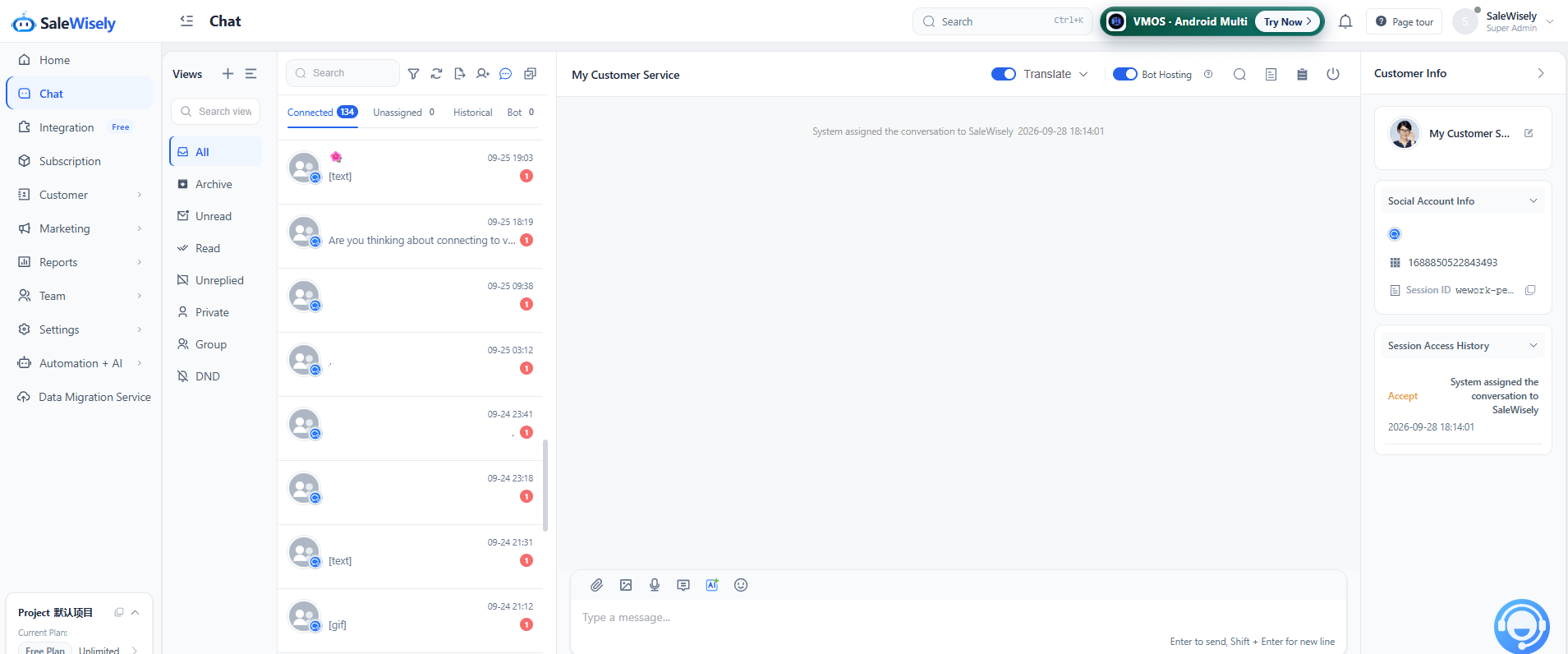
A customer's journey rarely starts and ends in the same channel. They may discover a product through social media, a website, a campaign, or a referral before continuing the conversation through WeCom. When customers interact with a business across multiple channels, an omnichannel customer conversation platform can complement WeCom by bringing those conversations into a centralized workspace. Shared inboxes, smart routing, and customer source tracking make it easier to identify where conversations came from and who should handle them.
Step 2: Build customer context before the next conversation
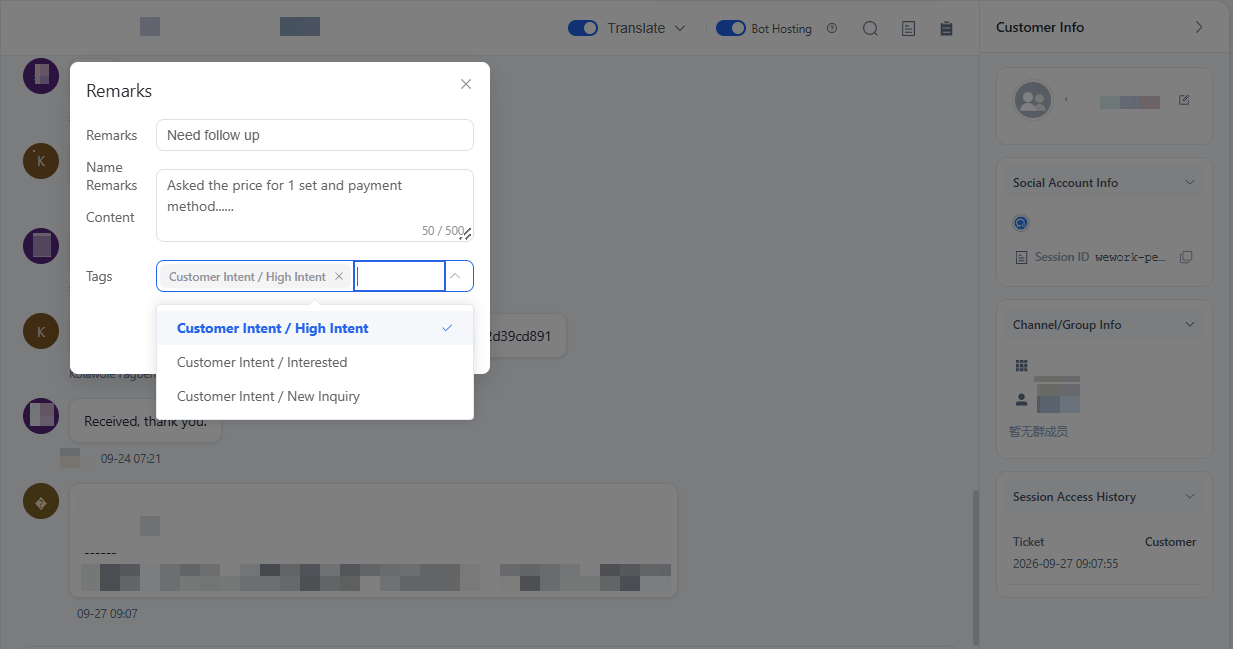
Once a customer enters the conversation, the next step is understanding who they are and what they need. Instead of relying only on the current chat, teams can combine customer profiles with conversation history, behavior, tags, orders, and other relevant information. This makes it easier to identify customer intent and personalize the next interaction.
For example, a customer who previously asked about pricing and then returned to ask about implementation usually requires a different follow-up from a new contact asking a general product question.
A CRM can connect these interactions into a customer timeline, making the next conversation more relevant and easier to manage.
Store customer profiles and custom fields
Track conversation and activity history
Connect orders or tickets with customer records
Segment customers by behavior, source, region, or purchase history
Identify customers who need follow-up
Step 3: Respond faster without losing the human touch
Response speed matters throughout the customer journey, especially when customers are comparing products or asking purchase-related questions. An AI Agent and automation workflows can assist with repetitive interactions such as FAQs, product information, basic qualification, and routine requests using a connected knowledge base. More complex conversations can then be handed to a human agent with the relevant context attached.
This creates a simple division of work: AI handles repetitive questions → automation manages routine workflows → sales teams handle high-intent conversations. For businesses serving international customers, AI-powered real-time translation tools can also complement the workflow by reducing language barriers and helping teams communicate with customers in different languages.
Step 4: Match follow-ups to customer intent
Not every customer is ready to purchase during the first conversation. Some need more product information, while others may be comparing alternatives or waiting for internal approval. Businesses can use customer data to determine what information is most relevant at each stage.
Segmented messaging helps businesses engage customers with more relevant content. Customers can be grouped by tags, behavior, or other attributes, allowing teams to personalize follow-ups, support conversions, and encourage repeat purchases.
FAQs
What is WeCom used for?
WeCom is an enterprise communication and collaboration platform used for internal teamwork, customer communication and business workflows. Businesses can also use it to manage customer relationships through connected WeChat contacts and other business tools.
What's the difference between WeChat and WeCom?
WeChat is primarily designed for personal communication and social networking, while WeCom is built for businesses and workplace communication.
How much does WeCom cost?
WeCom is free with core communication and collaboration features, while advanced services, such as the Customer Acquisition Assistant and number of external contacts, require payment. Pricing varies depending on the services used, usage volume, and business scale, so businesses should check the current official pricing for their specific needs.
Can I earn money using WeChat Work?
Yes. Businesses can use WeCom to support revenue-generating activities such as customer acquisition, product promotion, sales conversations, order management, and customer retention. WeCom itself does not pay users for using the platform; revenue comes from the products or services a business sells.